Wednesday, 22 May 2019


Happy, Healthy Gardening


With the weather starting to look more like spring,  gardening season is fast
approaching.  Not only are we able to reap the benefits of gardening through flowers or
vegetables, but we are also able to take advantage of fresh air, sunshine, and exercise. All of these, when done correctly, are great ways to maintain good health.


With a lot of us being much less active throughout the winter, we have set ourselves up for
pain and/or injury if we are  not careful. Thankfully, with a little effort, we should be able to enjoy a summer filled with lots of outdoor activities.


Tips from John Berge, Osteopathic Manual Practitioner. 


I’d like to share a few pointers which could help save a few aches and pains this
gardening season.

  1. Warm up-  a quick walk and a few stretches can help guard against strained and sore muscles and prepare the back for flexion.
  2. Bend from the hips, not the lower back-  while bending forward, try not to have your back curve upwards, instead push your hips backwards, maintaining  a flat lower back while you bend. Like so
  3. Remember to bend with your knees-  By bending with your knees you are taking most of the pressure away from the lower back.
  4. Use tool helpers-  there are many ergonomic tools out there that help make the job easier.  Also, a knee pad can save your knees from injury. Helper
  5. Have Fun- make sure not to rush.  This is supposed to be a pleasant experience.  A time to enjoy the outdoors. Take breaks, wear sunscreen and drink lots of water.


Osteopathy

I would just like to say a few words regarding the benefits of Osteopathy for those who are not yet familiar with it yet.  Our principles are simple.

1. The body is a dynamic unit of function.
2. Structure and function are interrelated.
3. The body is self-healing and self-regulating.
 
My treatments are gentle, but effective.  My goal is to get things moving properly, and put everything in place. With this, the body should be able to function properly.
 

For those of you wanting to prepare your body for gardening, fix your body from gardening, or just help maintain your health, book an appointment at The Coach House.


John's Schedule 
Online booking with up to date availability


Monday 8 am- 1:00 pm
Wednesday 2 pm- 7:30 pm
Friday 2 pm - 7:30 pm

For more information email John at john@thecoachhousetc.ca

Happy Gardening

Tuesday, 7 May 2019

Let's Talk Posture


Poor posture


When we talk about posture people tend to have two images in their mind "good" and "bad" posture. We tend to think of good posture as rigid and bad posture as slouching. The truth is that posture is how we carry ourselves and how our bodies take shape when sitting, standing, sleeping and moving through our daily lives.


What is good posture? Good posture is where the body keeps the bones and muscles in a neutral position to reduce the load on the structures and create ideal anatomical alignment. A neutral alignment creates a minimal amount of stress on the bodies structures and keeps the body balanced.


Benefits of Neutral Posture

Decrease in muscle tension and pain
Decreases and prevents migraines and headaches
Reduces stress on spinal ligaments
Reduced wear and tear of joint surfaces
Reduces muscle stress and strains
Reduces fatigue
Improves concentration
Improves circulation
Supports digestion
Tones postural breathing muscles
Facilitates proper breathing
Improves self-confidence
Promotes positive mental health


Neutral Sitting


Tips for Neutral Sitting Posture          


  • Feet flat on the floor
  • sit square on the pelvis
  • Lengthen through the spine
  • Pull the shoulder blades onto the back body
  • Stack shoulders over hips
  • Stack ears over shoulders
  • Tuck the chin in slightly


Considerations for desk workers:

Ergonomic assessments can be a great way to optimize your workspace to reduce postural pain.


Make sure to get up and move every 45 minutes. Even if it's just to stand up and sit back down again it allows your body to reset momentarily. It also prevents us from staying in postures that compromise neutral for extended periods. Find yourself losing track of time? Use a timer or alarm on your phone.


Car & Driving posture:
The car is a perfect time to adjust forward head carriage and practice postural awareness. Ensure your seat and headrest are adjusted properly; Lean the back of your head into the support of the headrest while sitting back in the seat. As your head comes off the headrest, notice and retakes the neutral position.


Neutral Standing
Tips for Neutral Standing Posture  


  • Feet hips distance apart
  • slight bend to the knee ( avoid hyperextending)
  • Neutral pelvis
  • Lengthen through the spine
  • Pull the shoulder blades onto the back body
  • Stack shoulder over hips
  • Stack ears over shoulders
  • Tuck chin in slightly 
When standing for extended periods consider a rubber pad to stand on or shoes with a good rubber sole to help negate the impact on the bodies joint structures.

Be sure to evenly distribute the weight between both feet. In particular, notice that you don't shuffle all your weight into one side of the body as this invites muscular imbalance into the body. 


Sit to stand desks can be a great option to reduce the effects of stagnant and sitting postures.


Postural imbalances  
Poor Standing Posture
 We are naturally designed to be strong through the muscles of the front of our bodies so when we allow our postural muscles to relax we tend to curl forward into a "slouched" or flexed position. Our world has rapidly changed to accommodate new technology and many of us spend extended hours of our day sitting for work, driving and then coming home to sit more in our leisure time.  The good news is that our bodies are highly adaptive.

Due to the high demand of postural strain, the muscles eventually become overwhelmed and the body assumes "poor" posture and begins to slouch. This feels to the body like relief but the more time the body spends in a non-neutral state the more it adapts but shortening the tissues that are flexed forward and overstretching the muscles of the back body to accommodate a new flexed posture. Research shows that clients with increased postural pain also show weakness in the postural muscles. This tends to reduce the postural muscle's ability to hold a neutral posture which in turn increases the postural pain. This cycle continues and creates a feedback cycle that over time increase physical discomfort while decreasing physical resilience.


The good news is that with a treatment plan and homecare you can retrain your body and improve your posture and decrease negative symptoms.


Treating postural Concerns 


A client presenting with postural imbalances, their main area they wish to have focused on is the upper and mid-back and the tops of the shoulders so it’s important to address these areas to reduce pain and relieve tension. However, it’s also important to focus on opening up the front of the body. “Poor posture” can create short and tight muscles in the front and long and tight muscles in the back. These muscle imbalances took time to create so it will also take time to repair and rebuild. 


A typical treatment plan for this would begin with massage to the entire back but focus on releasing the muscles of the midback, upper back and shoulders. There are often trigger points to be released in many areas but also the muscles need to be flushed out and relaxed. Using calming and relaxing techniques to reduce the fight or flight response of the body so the body can release the feel-good hormones to naturally reduce the feelings of stress. (Learn more about how massage helps manage stress)


File:1117 Muscles of the Neck Upper Back.png


 The Erector muscles run along the entire spine and keep us upright. The Rhomboids run from the spine to the shoulder blade and assist keeping the shoulder blades back. The Trapezius has many attachments and has a few roles in keeping our shoulder blades down and back. Many RMTs like to focus on the entire shoulder girdles as well. These muscles are known as the Rotator Cuff muscles and include Infraspinatus, Supraspinatus, Subscapularis and Teres Minor. 


These muscles control the movement of your shoulder and arm and are often victims of the rounded shoulder posture and can become impinged or become irritated over time causing pain in the shoulder, down the arm and sometimes down into the wrist and hand. Most clients are familiar with the upper attachments of the Trapezius muscles on the tops of the shoulders. This and a less talked about muscle called Levator Scapulae work to raise your shoulders up. 


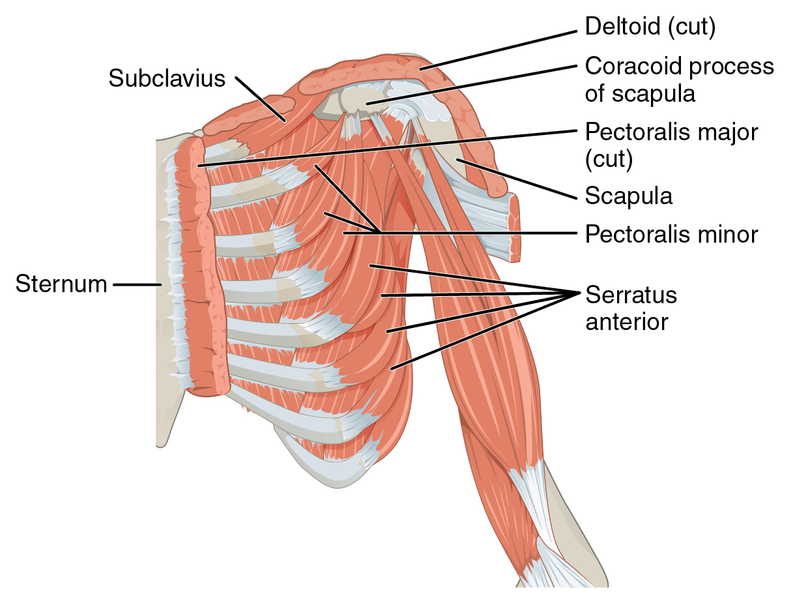
File:1118 Muscles that Position the Pectoral Girdle anterior.png


Next, we’ll turn over and massage the front body. With proper draping, we’ll focus on the muscles just below the collar bone and along the top of the chest and front of the shoulder. Here the muscles can be tight and short so the goal is to relieve tension and lengthen. The Anterior Deltoids and Pectoralis Major work together to move the arms and when they shorten contribute to rounded shoulders. 


Lastly, we finish with the muscles of the neck. These small muscles control the movement of the head, but with “poor posture” contribute to the forward head carriage. Side and back neck muscles, the Scalenes, Levator Scapulae, Splenius Cervicis and the top attachment of the Trapezius muscle can become elongated and weak which can cause neck discomfort and headaches. Finally, we release the tiny muscles at the base of the skull, the Suboccipitals and finish with a soothing scalp massage to encourage that final feeling of relaxation. 


As important as it is to release tension from tight muscles and to reduce pain, the homecare afterwards is just as important! With simple exercises and stretches done at home, you can strengthen weak muscles and encourage proper posture. 


Coachhouse RMT's Laura & Megan 


Here at the Coach House, we have several different modalities to help you manage postural concerns. From Massage Therapy to Physiotherapy to Chiropractic and Osteopathic care these hands-on modalities can help you reduce postural discomfort, prevent injury and where needed help rehabilitate imbalances. Visit our website to learn more about what modalities we have available. 


Coachhouse RMT's Laura & Megan
laura@thecoachhousetc.ca
megan@thecoachhousetc.ca
Follow us: FB & Instagram


Be sure to follow The Coach House on Facebook and Instagram to keep in touch and get notifications of new blog posts.


Disclaimer: The information contained in these topics is not intended nor implied to be a substitute for professional medical advice, it is provided for general educational purposes only. This information shouldn’t take the place of seeing your primary care provider for individualized health recommendations.

Wednesday, 24 April 2019

Massage and mental health

Mental Health is something that affects every single one of us regardless of culture, race, income bracket, gender, ages and educational backgrounds. 

Mental Health is defined as a person's condition with regard to their psychological and emotional well-being. Investing in positive mental health and resiliency building activities helps to maintain our wellbeing. 

With 1 in 5 Canadians experiencing mental illness in their lifetimes. Even more shocking is that over 60% of these people do not access treatment largely from complications related to stigma. 


Slowly the conversation around Mental Health is changing. As a Massage Therapist, many of my clients come to see me as part of their mental health support system. I see a wide spectrum of clients from those actively seeking support for Anxiety management to those battling burnout and others who are looking for some time to relax and recharge. 

Today we are going to look at how Massage Therapy can help to support positive mental health.


Health Benefits of Massage Therapy

Stress Reduction
Reduces symptoms of Anxiety and Depression
Engages Parasympathetic Nervous system ( Rest & Digest)
Balances Hormones
Reduces Muscle tension and Pain 
Supports Proper Breathing
Supports the Immune System 
Supports the Circulatory System
Reduces Blood Pressure


Many of Massage Therapies benefits comes from its effect on the nervous system. Massage Therapy gets many of its health benefits from its soothing effect on our Sympathetic nervous system commonly responsible for our fight or flight reactions. As the body decreases the effects of stress responses we enter a state of relaxation. The relaxation response is the result of the body supporting the Parasympathetic nervous system which is primarily responsible for immune function, digestion and internal repair. It is necessary to spend time actively relaxing, known as active rest, and engaging your relaxation response to maintain mental and physical health. 


Massage therapy is able to promote relaxation through a calm environment and a treatment tailored to increase relaxation and comfort. Several studies indicate the benefit of hands-on therapies to help induce a state of relaxation. Therapeutic touch can increase an individual's awareness of their body. As a result Massage therapy can be used to reduce muscle tension and pain, which in turn decreases stress stimuli within the body further supporting relaxation. For many clients, Massage Therapy is an opportunity to dissipate the tension patterns in the body that can be a result of stress. 


If you are looking for a way to support your body during times of stress consider scheduling a regular massage. Talk to your practitioner next time you are in the clinic, we can help suggest treatment options and tailor your home care to your specific needs.  In my practice, I have many clients who see me purely for mental wellness. Some of these clients and I work directly on counteracting the effects of anxiety other clients focus more on relaxation and having time for active rest. 


Several other modalities including chiropractic, osteopathic care and acupuncture are also effective ways to support the parasympathetic nervous system and reduce muscle tension are available at the clinic. Each individual will have a different preference of modalities but it is important to find one that helps you feel comfortable and relaxed. 


As a Mental Health Advocate, I am involved in the Region of Waterloo's Ways to Wellbeing program to help support positive mental health in our greater community. Resources for this program are available within the clinic for free. To get yours contact me directly or speak to your Coach House practitioner.


Interested in learning more? I provide public and corporate health lectures. For more information contact me.

Megan Prenty RMT, YT
megan@thecoachhousetc.ca
FB & Instagram


Be sure to follow The Coach House on Facebook and Instagram to keep in touch and get notifications of new blog posts.

Disclaimer: The information contained in these topics is not intended nor implied to be a substitute for professional medical advice, it is provided for general educational purposes only. This information shouldn’t take the place of seeing your primary care provider for individualized health recommendations. Hand on physical therapies have an important role in the management of mental health, however, they are no substitute for professional mental health specific support.


Related Posts you may be interested in:

Monday, 8 April 2019

Stretches for Cycling


Whether you are a racer, ride trails, commute or just ride on the weekend it's important to know these 8 simple stretches to improve your ride! 

Cycling requires a flexed posture and a lot of repetitive movement through the lower body that can lead to tension and muscle pain when not balanced. Over time this muscle tension can lead to shortened or limited range of motion.

By lengthening the muscles the body can increase flexibility to regain postural balance. This also combats the formation of adhesions, fascial restrictions and protects proper circulation and range of motion.


Stretching is an important part of maintenance for your biking routine. It is helpful for recovery and injury prevention.


Here are 8 Stretches (and variations) to keep you cycling happily this season


Cat & Cow

Targeted Muscle: Spinal erectors (cervical, thoracic and lumbar)

How to Do: Stack hips over knees and shoulder over palms.
Cat: Tuck the chin in. Press into the palms allowing the shoulder blades to separate. Press the mid back up towards the ceiling.
Cow: Lift the chin, drop the breast bone towards the mat and squeeze the shoulder blades together. Press the belly button towards the mat. Inhale to cow, exhale to cat. Repeat slowly for 15 breaths.


Benefit: Cat and Cow are a great way to tune back into your breath and move your spine through flexion and extension. This is good after long rides or prolonged sitting to help reset postural muscles of the trunk.


Camel

Targeted Muscle: Hip flexors, Abdominals, Pectoralis major & minor, anterior neck

How to Do: Kneel on your shins, stacking ears over shoulders and shoulders over hips. Bring hands to low back and squeeze shoulders together, lifting the breast bone as the heart tilts upwards. Chin lifts as you lean backwards. Hold for 30 seconds.

Benefit:
Helps to open the front of the body including the neck, chest and hip flexor. Important to reset postural after rides and prolonged sitting.


Bridge


Targeted Muscle: Abdominals, Psoas

How to Do: Lay on your back with your feet on the floor and your knees towards the ceiling. Bring your arms out wide and tuck your shoulders underneath you. Push down through the soles of your feet, shoulders and back of the head.  Squeeze through your glutes as you lift belly and chest to the ceiling. Hold for 30 seconds.

Benefit:
This posture helps to tone and strengthen the hamstrings, glutes and lower spinal erectors. This posture stretches the hip flexors (TfL, rectus femoris) and opens the chest to reset biking posture.


 Hero


Targeted Muscle: Shin muscles, Quadricep muscles of the thigh, hip flexors (tfl, psoas), abdominals and pectoralis major.

How to Do: Kneel on your shins sitting back allowing the feet to open wider than the hips. Reach behind you and begin to lean back until you have a comfortable stretch through the front of the thighs and front of the body. If possible recline to your elbows or to the floor raising arms above head as you push the backs of the shoulders to the mat and allow the heart to lift. Hold for 30 seconds.

Benefit: Allows a stretch through the quadriceps and hip flexors while opening the chest and the front of the body.


 Bound Angle


Targeted Muscle: Adductor group (Muscles of the inner thigh)

How to Do: Sit tall, bring the soles of the feet together and let the knees fall open and gently pull towards the ground. Forward fold to intensify the stretch as needed. Hold for 30 seconds.

Benefit:
Helps to release tension the muscles of the inner thigh and that attach onto the pelvis.


 Lunge 


Targeted Muscle: Hip flexors & quadriceps

How to Do: Come into a lunge position with on hand on the side of the front foot while bringing the back knee to the ground. Tuck the chin in and stretch the spine long while squeezing the shoulders together. The front leg should have the knee stacked over the ankle. Lean the body weight into the front leg. Hold for 30 seconds.

Benefit: Helps to stretch out tight hip flexors and quadriceps while toning postural muscles.


Targeted Muscle: Hip flexors quadriceps

How to Do: Come into a lunge position with both hands on the inside of the front foot. Start to push into the baby toe side of the front foot and allow the knee to open away from the shoulder. Hold for 30 seconds.

Benefit: This variation helps to strengthen pelvic ligaments and the adductor attachments to the pelvis.

Targeted Muscle: Hip flexors & quadriceps

How to Do: Come into a lunge position and lift the torso to bring shoulders over hips. Lean the body weight into the front leg with the front arm learning on the quad for balance. With the back leg point your toes and pull them up towards the ceiling. If possible reach you hand/strap to the foot. Hold for 30 seconds.

Benefit: This variation isolates the deeper hip flexors like psoas as well as a release of the quadriceps muscles.


 Pigeon


Targeted Muscle: Bent leg: Piriformis, Lateral quadricep and hamstring. Opposite leg: Psoas

How to Do: Begin on hands and knees on all fours. Bring your left ankle behind your right wrist and gently lay your leg onto the floor in front of you. Let the right leg drop down on the floor extending behind you and feel the line of pull along the left hip. The body can stay activated by pressing through the hands placed in front of them and maintain a long flat spine. Tuck the chin in to neutralize the spine. Hold for 30 seconds.

Benefit:
This muscle helps to release tight glutes, piriformis and psoas- those hard-working muscles that attach to the pelvis.


Thread the Needle


Targeted Muscle: Piriformis, adductor (inner thigh) twist: Glute med/min


How to Do: Lay on your back, bring one baby toe to the opposite thigh. Gentle peel knee away from your chest. Add the twist by allowing the foot of your bent leg drop to the floor.


Benefit: This pose helps to release the muscles of the lateral pelvis (Gluteus Medius and Minimus) as well as piriformis. The twist allows a stretch through the lower lumbar spine.


If you are looking at taking up a new activity like cycling let your healthcare team help keep you moving. Getting a regular massage, chiropractic or osteopathic care can be great to support physical hobbies and athletic endeavours and help prevent injuries. Physiotherapy can be an excellent path for injury rehabilitation. Talk to your practitioner next time you are in the clinic, we can help tailor your homecare to your specific needs.


Megan Prenty RMT, YT
megan@thecoachhousetc.ca


Be sure to follow The Coach House on Facebook and Instagram to keep in touch and get notifications of new blog posts.


Disclaimer: The information contained in these topics is not intended nor implied to be a substitute for professional medical advice, it is provided for general educational purposes only. This information shouldn’t take the place of seeing your primary care provider for individualized health recommendations.